03/12/2026
After a powerful storm sweeps through Venice, FL, the sight of a leaning tree or downed power line can be unsettling and incredibly dangerous. Knowing the right steps to take immediately is crucial for your safety and to protect your property. This guide will help you understand the hazards and outline the essential actions for managing storm-damaged trees and power lines in our local area.
Key Takeaways
- Never approach leaning trees or downed power lines; always assume they are energized and dangerous.
- Immediately contact 911 or your utility company for downed power lines, then a professional tree service for tree hazards.
- Understand Venice, FL’s specific permit requirements for tree removal, especially for protected species.
- Emergency tree removal is significantly more expensive than proactive pruning, averaging $804 in Venice, FL.
- Homeowners’ insurance may cover removal if the tree damages an insured structure, but policies vary.
- Choose a licensed, bonded, and insured tree service like My Florida Tree Guys, Venice, with Professional arborists and specialized equipment for safe and efficient work.
What Defines a Leaning Tree or Power Line Hazard?
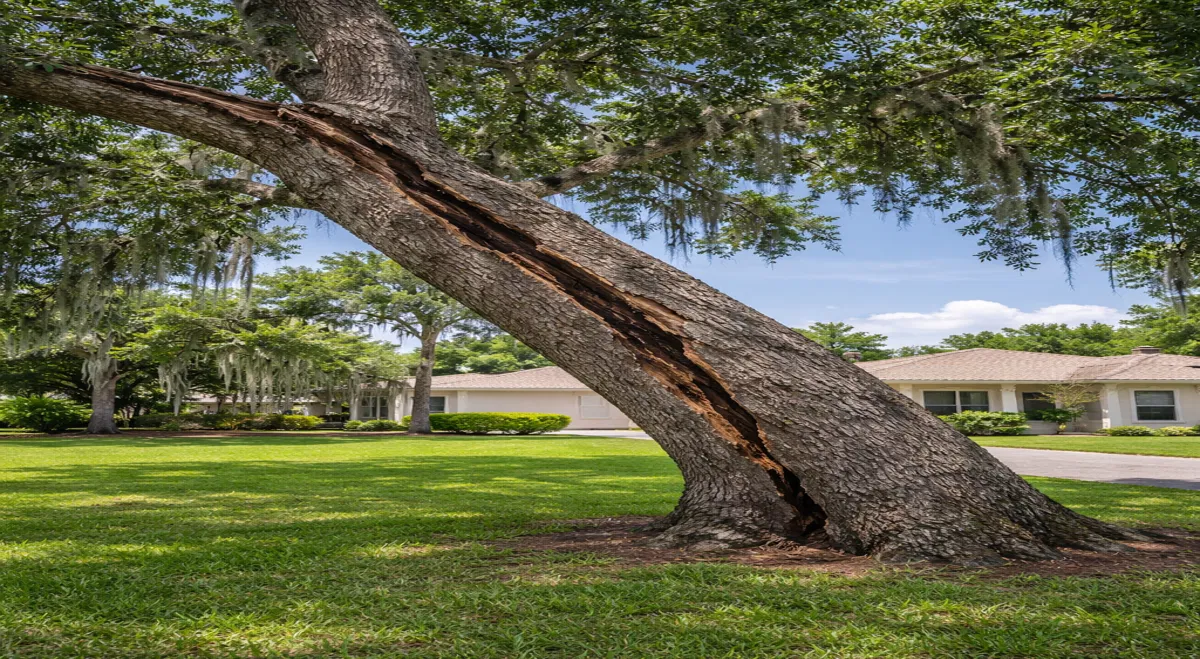
A leaning tree or power line hazard refers to any tree that has been compromised by a storm, causing it to tilt precariously, or any power line that is sagging, broken, or entangled with a tree. These situations pose immediate and severe risks to life and property, demanding prompt, professional attention.
Venice’s Unique Vulnerabilities: Sandy Soils and Storm Impact
In Venice, our sandy soils offer less root stability, making trees highly susceptible to falling during strong winds, especially when saturated by heavy rains. Coastal proximity also increases vulnerability to wind intensity and potential saltwater intrusion, which can further weaken tree health. Recognizing these specific local vulnerabilities helps us understand the heightened risk posed by leaning trees here.
Immediate Steps After Discovering a Leaning Tree or Downed Line
Your immediate response to a leaning tree or power line determines the safety outcome. Prioritizing human life and preventing further damage is always the primary concern. Resist the urge to inspect or touch anything yourself.
Prioritizing Safety: Your First Move
Safety is non-negotiable. If you see a leaning tree near power lines or any downed line, your first action is to secure the area and keep everyone away. Assume all power lines are live and extremely dangerous.
- Stay Clear: Maintain a distance of at least 30 feet from any downed or damaged power lines.
- Warn Others: Alert family, neighbors, and passersby to the danger.
- Keep Pets Away: Ensure animals are confined and cannot approach the hazard.
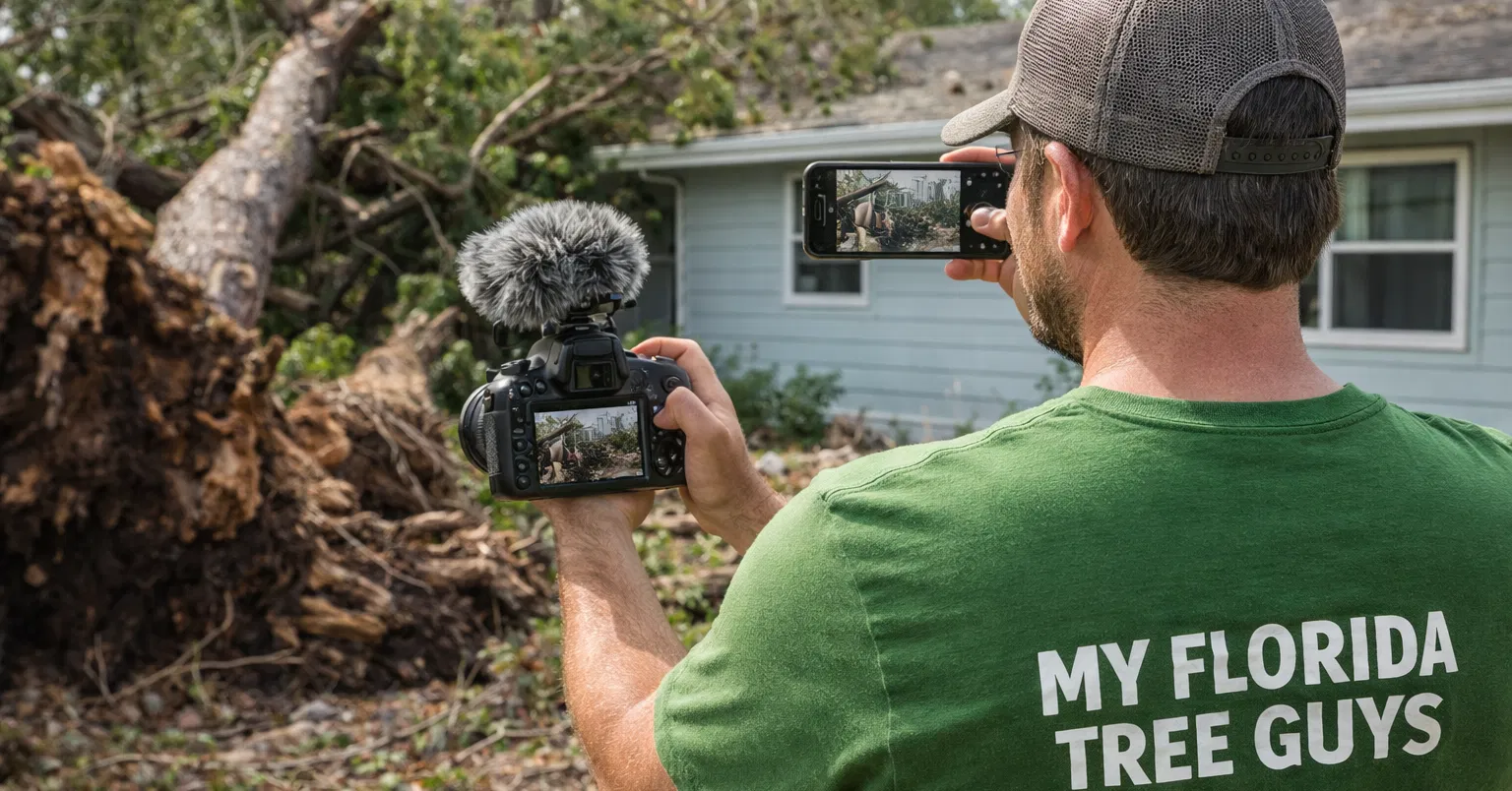
- Document, Don’t Touch: Take photos from a safe distance for insurance purposes, but do not touch the tree or lines.
Whom to Call: Emergency Services vs. Tree Professionals
Knowing who to call is critical. Emergency services handle immediate life threats, while utility companies address electrical infrastructure, and tree professionals handle the tree itself. Misdirecting your call can cause delays.
- Call 911 immediately: If there’s an immediate threat to life, fire, or severe property damage, dial 911.
- Contact Your Utility Provider: Report downed or damaged power lines directly to Florida Power & Light (FPL) or your specific electricity provider. They must de-energize lines before any work can safely begin.
- Call My Florida Tree Guys, Venice: Once the area is deemed electrically safe by the utility, contact our team. We offer 24/7 emergency services for safe and efficient tree assessment and removal.
Understanding the Risks: Why Leaning Trees Are Dangerous
Leaning trees are not just unsightly; they are serious hazards that can escalate quickly. Understanding the specific dangers helps emphasize why professional intervention is essential.
Electrical Hazards: The Power Line Threat
Any contact between a tree and a power line creates an immediate electrical hazard. Even seemingly minor contact can electrify the tree, ground, or nearby objects, posing a risk of severe injury or fatality.
- Electrocution Risk: Touching an electrified tree or standing on wet ground near a downed line can be fatal.
- Fire Hazard: Sparks from damaged lines can ignite dry vegetation or structures.
- Power Outages: Damaged lines lead to widespread power disruptions, impacting homes and businesses.
Structural Damage: Protecting Your Property
A leaning tree puts immense stress on its remaining root system and trunk, making it unstable. This instability can lead to sudden collapse, causing catastrophic damage to your home, vehicles, or other structures.
- Roof and Wall Damage: A falling tree can crush roofs, break through walls, and damage foundations.
- Vehicle Destruction: Parked cars, boats, or RVs are vulnerable to impact.
- Outbuilding Collapse: Sheds, fences, and detached garages are often in the path of falling trees.
Secondary Falls and Hidden Dangers
Beyond the obvious, leaning trees can hide secondary dangers. Weakened branches, shifted root plates, and the potential for the tree to snap or roll unexpectedly make them unpredictable. Even after initial assessment, extreme caution is necessary.
- Delayed Collapse: A tree might stand for hours or days after a storm before giving way.
- Falling Limbs: Smaller, compromised branches can break off without warning.
- Root Plate Instability: The entire root system can be compromised, leading to the tree toppling over completely.
The Role of Utility Companies vs. Tree Service Providers
Understanding the distinct responsibilities of utility companies versus professional tree service providers is crucial for efficient and safe resolution. Homeowners often get confused about who handles what.
| Service Provider | Primary Responsibility | Scope of Work (Regarding Trees) | When to Call |
|---|---|---|---|
| Utility Company (FPL) | Electrical safety and power restoration. | Clearing vegetation from active power lines within the utility right of way and de-energizing lines. | When power lines are damaged, sparking, down, or tangled with trees. |
| My Florida Tree Guys. Venice | Safe tree removal and property protection. | Hazardous tree removal, pruning, debris cleanup, stump grinding, and emergency storm response. | After power is confirmed off or when trees threaten structures, driveways, or people. |
When to Call the Power Company (and What to Expect)
Utility companies, like Florida Power & Light, are responsible for maintaining the safety and integrity of their electrical infrastructure. Their primary concern is power restoration and preventing electrical hazards.
- Direct Line Interference: If tree limbs are touching or have fallen onto active power lines.
- Downed Lines: Any power line that is on the ground or visibly damaged.
- Immediate Electrical Hazard: If there’s sparking, smoke, or a clear threat of electrocution.
- What to expect: They will de-energize lines and clear vegetation only as it pertains to the safe operation of their lines. They generally won’t remove the entire tree if it’s not directly within their right-of-way.
When to Call a Professional Tree Service (and Why)
Once the electrical hazard is neutralized by the utility, a professional tree service steps in. We handle the physical removal of the tree, ensuring no further damage to your property.
- Tree Removal: For the complete, safe removal of the damaged or leaning tree.
- Complex Situations: When a tree is leaning on a structure, requires crane assistance, or is in a difficult-to-access area.
- Debris Cleanup: After removal, professionals clear all tree debris from your property.
- Permit Navigation: A good tree service can advise on or assist with local permit requirements.
Navigating Local Regulations for Tree Removal in Venice, FL
Venice, FL, has specific ordinances governing tree removal and trimming, which homeowners must understand. Ignoring these can lead to fines or complications. My Florida Tree Guys, Venice, is well-versed in these local requirements.
Understanding Venice’s Tree Ordinance
The City of Venice took over tree permit responsibility from Sarasota County in 2020. This means local rules now apply directly. Permits are often required for specific tree types, even on private property.
- Heritage Trees: Protected due to their size, age, or historical significance.
- Venetian Trees: Designated species that contribute to the city’s unique aesthetic.
- Canopy Road Trees: Trees within designated scenic corridors, requiring special protection.
- Protected Trees: Generally, any Florida Friendly™ tree four inches in diameter (DBH) or larger, and Sabal Palms with a minimum of six feet of clear trunk.
Permit Exemptions and Requirements
While some removals are exempt, it’s safer to confirm. Always check with the City of Venice Planning Department or consult an arborist to avoid compliance issues. For example, Florida Statute 163.3209 exempts utilities from local permit requirements for vegetation maintenance within their established right-of-way, but homeowners are still subject to local rules for trees outside this zone.
- Permit Required For: Removal of Heritage, Venetian, or Canopy Road trees. Pruning branches 10 inches or larger on Heritage/Venetian trees, or 2 inches or larger within a Canopy Road Protection Zone.
- Exemptions: Single-family zoned lots of 1/2 acre or less are typically exempt from some tree code sections, but not for Heritage, Venetian, or Canopy Road trees.
- Mitigation: Removal of protected trees usually requires replacement with new or transplanted trees.
- Arborist Supervision: Pruning in Canopy Road Protection Zones must be supervised by an ISA Certified Arborist.
The Process of Safe Tree Removal Near Power Lines
Removing a leaning tree, especially one near power lines, is a complex and dangerous task that demands specialized skills and equipment. It’s not a DIY project. My Florida Tree Guys, Venice, follows a strict, safety-first protocol.
Initial Assessment and Risk Analysis
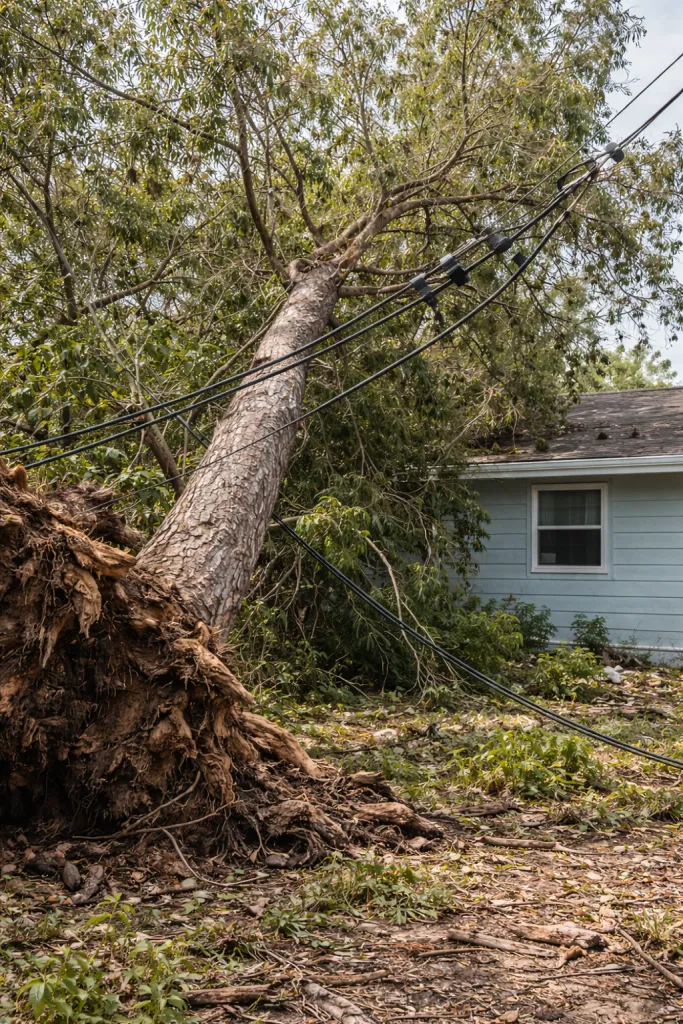
Our Professional arborists begin with a thorough evaluation of the tree’s condition, lean angle, structural integrity, and proximity to all hazards. This initial assessment guides the entire removal plan.
- Hazard Identification: Pinpointing all potential risks, including electrical, structural, and personal safety.
- Tree Health Evaluation: Assessing decay, rot, and structural weaknesses that might affect removal.
- Fall Path Prediction: Calculating the safest direction for controlled felling or sectioning.
- Equipment Needs: Determining if crane assistance, remote-controlled equipment, or other specialized tools are necessary.
Coordination with Utility Providers
If power lines are involved, direct communication with the utility company is non-negotiable. We ensure lines are de-energized or safely cleared before our team begins work. This step prevents electrocution and ensures a safe working environment.
- Utility Notification: Confirming the utility company is aware of the situation and has taken necessary precautions.
- Line De-energization: Requesting the power company to temporarily shut off power to the affected lines.
- Clearance Verification: Ensuring adequate clearance from power lines before any tree work commences.
Specialized Equipment and Techniques
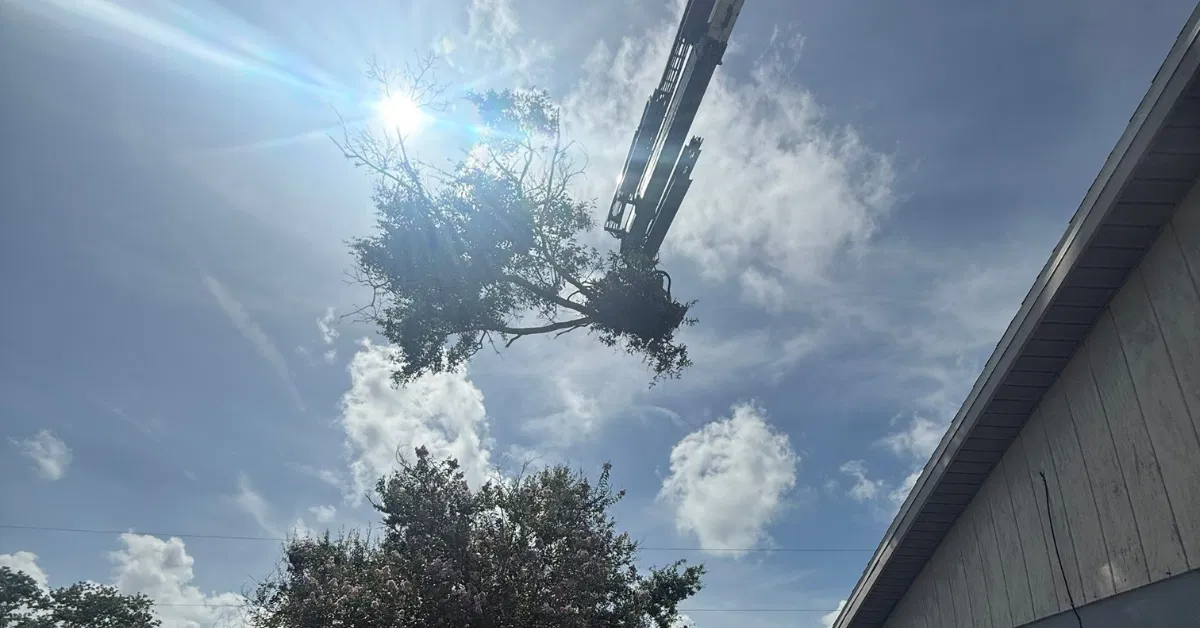
We utilize state-of-the-art equipment to perform safe and efficient removals, especially for large or complex trees. Our remote-controlled cranes allow us to lift heavy sections of trees from a safe distance, minimizing risk to our crew and your property.
- Crane-Assisted Removal: Safely lifting and lowering large tree sections over structures or obstacles.
- Rigging and Roping: Using advanced techniques to control the direction and speed of falling limbs.
- Bucket Trucks: For accessing high branches safely and precisely.
- Remote-Controlled Equipment: Enhancing safety by allowing operators to work from a secure distance.
Debris Cleanup and Site Restoration
Once the tree is safely removed, our work isn’t finished. We ensure your property is left clean and free of debris. This includes chipping branches and removing trunk sections, leaving your yard tidy.
- Branch Chipping: Converting smaller branches into mulch.
- Log Removal: Hauling away large trunk sections.
- Site Raking and Sweeping: Ensuring no hazardous wood chips or debris remain.
- Optional Stump Grinding: Grinding the remaining stump below ground level for a seamless finish.
Cost Considerations for Emergency Tree Services
Emergency tree removal after a storm is typically more expensive than scheduled services due to urgency, risk, and specialized equipment. Understanding these costs helps you prepare and make informed decisions.
Factors Influencing Emergency Tree Removal Costs
The average cost for emergency tree removal in Venice, FL, is around $804, but this can vary widely. Statewide, emergency storm-related removals range from $500 to $3,000, with large, complex jobs potentially exceeding $2,800. These costs are projected to increase by 5-8% in 2025-2026 due to inflation and rising insurance premiums for tree service companies.
- Tree Size and Type: Larger, denser trees require more time and specialized equipment.
- Location and Accessibility: Trees in confined spaces, near structures, or on steep slopes increase complexity.
- Proximity to Hazards: If the tree is near power lines, structures, or difficult terrain, the risk and cost rise.
- Equipment Required: Crane-assisted removal, though safer, adds to the overall expense.
- Urgency: Emergency, after-hours, or weekend services command a premium.
- Debris Haul-Away: The volume of debris and disposal fees impact the final price.
Proactive Pruning: An Investment Against Storm Damage
While emergency removal is a necessity after a storm, proactive tree pruning is a smart investment that can prevent much larger expenses. Regular maintenance strengthens trees and reduces their vulnerability.
- Cost-Effective Prevention: Proactive pruning typically costs $200-$500 per tree, significantly less than potential storm damage repairs ranging from $5,000-$20,000.
- Enhanced Tree Health: Regular pruning removes dead or weak limbs, improving the tree’s overall structure and resilience.
- Reduced Risk: Properly maintained trees are less likely to fall or suffer extensive damage during high winds.
- Long-Term Savings: Investing in preventative care can save you thousands in emergency services and property repairs down the line.
Insurance Coverage for Storm-Damaged Trees
Navigating insurance claims for storm-damaged trees can be confusing. It’s important to understand what your homeowners’ insurance policy typically covers and what it doesn’t.
What Homeowners Insurance Generally Covers
Most standard homeowners’ insurance policies offer some coverage for tree removal, but usually under specific conditions. It’s rarely a blanket coverage for any fallen tree.
- Damage to Insured Structures: If a tree falls and damages your house, garage, fence, or other insured structures, the cost of repair and removal of the tree may be covered.
- Blocking Driveway/Ramp: Some policies cover removal if the tree blocks a driveway or a ramp for disabled access, even without structural damage.
- Neighbor’s Tree Damage: If your neighbor’s tree falls and damages your property, your policy typically covers the damage, not theirs. Your insurer may then seek reimbursement from your neighbor’s policy.
- Limited Coverage: There’s often a cap on tree removal costs (e.g., $500-$1,000 per tree, up to a total limit), even if structural damage occurred.
Making an Insurance Claim: Tips for Homeowners
To maximize your chances of a successful claim, follow these steps. Documentation is key, and acting quickly can prevent further issues.
- Document Everything: Take clear photos and videos of the damaged tree and any property damage from multiple angles.
- Contact Your Insurer Promptly: Report the damage as soon as safely possible.
- Get Multiple Estimates: Obtain detailed quotes from reputable tree services like My Florida Tree Guys, Venice, for removal and cleanup.
- Review Your Policy: Understand your specific coverage limits, deductibles, and exclusions before initiating work.
- Keep Records: Maintain a file of all communications, estimates, and receipts related to the incident.
Choosing the Right Tree Service in Venice, FL
Choosing the right tree service after a storm is a critical decision. You need a company that prioritizes safety, operates efficiently, and understands the unique challenges of our Venice environment.
Key Qualities of a Reliable Arborist
A qualified arborist is more than just someone with a chainsaw. They possess the knowledge, training, and experience to safely and effectively manage tree care and removal.
- Professional Arborists: Indicates a high level of knowledge and adherence to industry best practices.
- Licensed, Bonded, and Insured: Protects you from liability for accidents or damage on your property.
- Emergency Response Capability: Offers 24/7 service, crucial for post-storm situations.
- Specialized Equipment: Possesses the right tools, including cranes and remote-controlled options, for complex jobs.
- Local Knowledge: Familiarity with Venice’s tree species, climate challenges, and permit regulations.
- Strong Reputation: Check online reviews and ask for references.
Why My Florida Tree Guys, Venice, Stands Out
My Florida Tree Guys, Venice, is dedicated to providing superior emergency tree services to our community. We understand the stress and danger that storm-damaged trees present, and we’re equipped to handle them swiftly and safely.
- 24/7 Emergency Service: We’re always ready to respond when you need us most.
- Crane-Assisted Removal: Our advanced equipment ensures safe removal of even the largest, most precariously leaning trees.
- Licensed, Bonded, and Insured: Providing complete peace of mind and protection for our clients.
- Experienced Professionals: Our team consists of highly trained arborists and tree care specialists.
- Local Expertise: Deep understanding of Venice’s unique environmental conditions and regulations.
- Commitment to Safety: Adhering to ANSI A300 and ANSI Z133.1 pruning standards for every job.
Preventative Measures: Protecting Your Trees Before the Storm
While storms are unpredictable, you can significantly reduce the risk of tree damage by taking proactive measures. Prevention is always better than a costly, dangerous emergency.
Regular Tree Assessments and Pruning
Regular professional assessments and pruning are essential for maintaining tree health and structural integrity. Strong, healthy trees are far more resilient to high winds and heavy rains.
- Annual Inspections: Have an arborist inspect your trees for signs of disease, decay, or structural weakness.
- Deadwood Removal: Eliminate dead or dying branches that can easily break off during a storm.
- Crown Thinning: Reduce wind resistance by strategically removing interior branches, allowing wind to pass through.
- Structural Pruning: Shape young trees to develop strong branch architecture, preventing future issues.
- Cabling and Bracing: Provide supplemental support to weak limbs or multi-stemmed trees.
Selecting Storm-Resistant Tree Species
Choosing the right trees for our coastal Florida environment can make a big difference in storm resilience. Some species are naturally better equipped to withstand strong winds and sandy soils.
- Native Species: Often best adapted to local climate and soil conditions (e.g., Live Oak, Sabal Palm).
- Strong Wood: Trees with dense, flexible wood tend to fare better than those with brittle wood.
- Deep Root Systems: Species with extensive root systems provide better anchorage in sandy soils.
- Avoid Susceptible Species: Limit planting of trees known for poor storm performance, like Water Oaks or Laurel Oaks, near structures.
- Proper Planting: Ensure trees are planted correctly, allowing for healthy root development.
Frequently Asked Questions
What’s the first thing I should do if a tree is leaning on power lines after a storm?
You should never approach a leaning tree near power lines. Maintain a safe distance of at least 30 feet, assume all lines are energized, and immediately call 911 or your local power company. Then, contact a professional tree service like My Florida Tree Guys, Venice, for safe assessment and removal.
Do I need a permit to remove a storm-damaged tree in Venice, FL?
In Venice, FL, permits are often required for removing ‘Heritage Trees,’ ‘Venetian Trees,’ or trees within a ‘Canopy Road Protection Zone.’ Even for pruning large branches on these trees, a permit may be necessary. Single-family lots under 1/2 acre might have exemptions, but it’s always best to check with the City of Venice planning department or consult a professional arborist.
Will the power company remove a tree leaning on my power lines?
The power company is responsible for clearing vegetation that directly interferes with their transmission or distribution lines within their right-of-way. If the tree originates outside this area but impacts the lines, they may trim it to ensure safety. For trees not affecting power lines or for full removal, you’ll need a qualified tree service.
How much does emergency tree removal cost after a storm?
Emergency tree removal costs in Florida typically range from $500 to $3,000, with an average in Venice of around $804. Factors like tree size, location, proximity to structures/lines, and equipment needed (e.g., crane) significantly impact the final price. These costs can be 50-100% higher than standard removal.
Does homeowners’ insurance cover storm-damaged tree removal?
Homeowners insurance often covers tree removal if the tree caused damage to an insured structure (like your house or garage) due to a covered peril like a storm. Coverage for tree removal alone, or if it falls without damaging property, is usually limited or not included. Always review your policy and document everything.
What should I look for when hiring a tree service for storm damage?
Look for a company that is licensed, bonded, and insured, with Professional arborists. They should offer 24/7 emergency service, possess specialized equipment like remote-controlled cranes, and have a strong local reputation. My Florida Tree Guys, Venice, meets these criteria, providing safe and efficient solutions.
Get Immediate Help for Storm-Damaged Trees
When a storm leaves your property with leaning trees or entangled power lines, immediate and informed action is crucial for safety and property protection. Don’t risk electrical shock or further damage by attempting to handle the situation yourself. For reliable, 24/7 emergency tree services in Venice, FL, including expert crane-assisted removal and meticulous debris cleanup, trust My Florida Tree Guys, Venice. We’re licensed, bonded, insured, and ready to safely restore your peace of mind. Contact us today for immediate assistance.