05/14/2026
In the lush landscapes of Sarasota and Venice, Florida, the trees grow at an accelerated rate due to the year-round warmth and abundant sunshine. However, this rapid growth also means that dead wood can accumulate quickly. Many homeowners wonder if there is a specific season they should wait for before cleaning up their trees. While live tissue pruning is often best done during the dormant winter months, dead branch removal follows a different set of rules. Understanding these nuances is essential for maintaining a safe and beautiful coastal property.
A dead branch is more than just an eyesore; it is a biological liability. In the world of arboriculture, dead branches are often referred to as deadwood. Unlike live branches, which are actively involved in photosynthesis and nutrient transport, deadwood serves no functional purpose for the tree. In fact, it often hinders the tree’s ability to thrive.
When a branch dies, the tree naturally tries to seal itself off from the dead tissue through a process called compartmentalization. The tree creates a barrier at the base of the branch, known as the branch collar, to prevent decay from spreading into the main trunk. By removing these dead limbs, you assist the tree in this natural healing process, allowing it to focus its energy on new growth and structural reinforcement.
One of the most common misconceptions in Florida tree care is that you must wait for winter to prune. While this is generally true for major structural pruning of live branches to avoid stressing the tree, dead branches are an exception. Because the tissue is already dead, removing it does not cause the tree to lose any energy reserves or bleed sap.
In Sarasota, the best time to remove dead branches is as soon as you notice them. Waiting for a specific season only increases the risk of those branches falling during a sudden afternoon thunderstorm or a tropical system. Whether it is the heat of July or the mildness of January, taking out dead wood is a year-round maintenance task that provides immediate benefits to the safety and health of your landscape.
For residents of Sarasota County, the most significant deadline for tree maintenance is June 1st, the official start of the Atlantic hurricane season. Dead branches are the first things to fly off a tree when high winds arrive. These limbs can become dangerous projectiles, capable of shattering windows, damaging roofs, or taking out power lines.
Ideally, a full property sweep for dead wood should be completed in the spring. This pre-season pruning ensures that your canopy is as aerodynamic as possible. When a tree is cleared of deadwood, wind can pass through the branches more easily, reducing the sail effect that often leads to entire trees being uprooted. If you missed the spring window, do not worry; removing dead limbs during the summer is still vastly safer than leaving them up during a storm.
Dead branches act as a magnet for unwanted guests. In the humid climate of Venice and Sarasota, decaying wood is a prime habitat for wood-boring beetles, termites, and carpenter ants. These pests often start in the dead limbs and, if left unchecked, can migrate into the healthy parts of the tree or even into your home.
Fungal pathogens also thrive on deadwood. Spores from fungi like Ganoderma or various shelf mushrooms can establish themselves in dead branches and slowly work their way into the heartwood of the tree. By removing these dead sections early, you effectively remove the bridge that many diseases and pests use to compromise the rest of your landscape.
Sarasota’s high humidity creates a breeding ground for foliar diseases and moss. A tree cluttered with dead branches often has a dense, stagnant interior canopy where air cannot circulate. This lack of airflow traps moisture against the bark and leaves, promoting rot.
When you remove dead branches, you open up the canopy. This allows fresh air to move through the center of the tree, drying out the foliage after our frequent rain showers. Furthermore, it allows sunlight to reach the inner leaves and the grass or plants growing beneath the tree. This holistic improvement in the micro-environment around the tree helps prevent many of the common health challenges faced by coastal Florida species.
How do you tell if a branch is truly dead, especially in species like the Live Oak that may shed leaves naturally? One simple method is the scratch test. Gently scratch a small patch of bark on a suspicious twig. If you see green underneath, the branch is still alive. If it is brown and brittle, it is deadwood.
You should also look for signs of vertical peeling bark or the absence of buds during the growing season. In palms, look for fronds that have turned completely brown and are hanging down against the trunk. While some palms are self-cleaning, many species in our area require manual removal to prevent them from falling on sidewalks or driveways.
While it may be tempting to grab a ladder and a chainsaw, removing dead branches can be incredibly deceptive. Deadwood is notoriously brittle. Unlike live wood, which has some flexibility, dead branches can snap without warning when weight is applied or when they are cut.
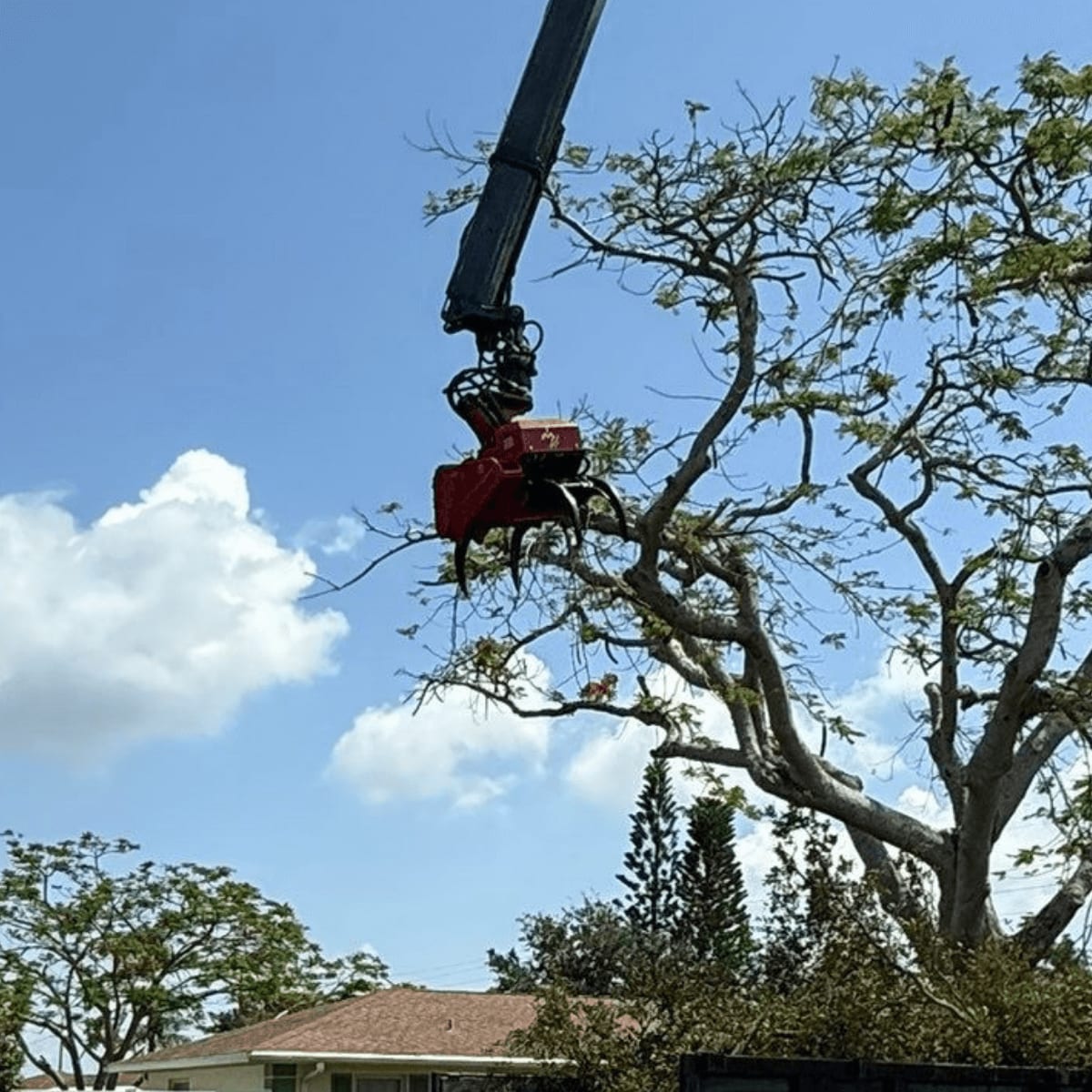
Large widow-makers, heavy dead limbs hung up high in the canopy, are particularly dangerous. They often require specialized rigging and climbing gear to be lowered safely to the ground. Without the proper equipment, these limbs can swing unpredictably, causing severe injury or property damage. For anything larger than a small twig that can be reached from the ground, professional intervention is the safest and most efficient choice.
Managing dead wood is a vital part of property ownership in Sarasota County, especially with our unpredictable coastal weather. My Florida Tree Guys is your local partner for professional tree care in Venice, Sarasota, and the surrounding Gulf Coast communities. Our team is led by experts who understand the unique growth patterns of Florida oaks, pines, and palms. We specialize in precision tree pruning and the safe removal of hazardous dead branches near homes, pools, and power lines.
Whether you need a routine safety sweep before hurricane season or an emergency limb removal after a storm, we provide dependable, safety-focused service. Our crews are fully insured and equipped with the latest technology to handle 24/7 emergency removals, tree trimming & pruning, stump grinding, and land clearing. We take pride in our clean workspaces and flat-rate pricing with no hidden surprises. Protect your home and enhance your curb appeal by choosing a team built on reliability.
Yes, dead branches can be removed at any time of year without harming the tree. It is actually recommended to remove them during the summer to prevent storm hazards.
While it doesn’t directly speed up growth, it allows the tree to redirect nutrients to healthy areas and improves the overall environment for the tree to thrive.
Dead palm fronds will be completely brown and dry. If there is any green or yellow remaining, the frond may still be providing nutrients to the palm.
Over time, they will eventually fall, potentially causing damage. They also attract pests like termites and can facilitate the spread of fungal decay into the trunk.
Yes, as decay progresses, the weight of the branch can eventually cause it to snap under its own gravity, even on a calm day.
Modern arborist standards generally advise against wound paints, as they can trap moisture and bacteria. A clean, professional cut at the branch collar is the best way to help the tree heal.
Yes, by thinning out dead material in the canopy, more sunlight can reach the ground, which significantly benefits the turf and landscaping below.
| Condition | Risk Level | Recommended Action |
| Large Limb Hanging Over Roof | Critical | Call for professional removal immediately |
| Multiple Brittle, Leafless Branches | Moderate | Schedule a safety pruning session |
| Dead Fronds on Tall Palms | High | Arrange for professional trimming to prevent falls |
| Decay or Cavities in the Main Limbs | High | Request a tree risk assessment from an arborist |
| Branches Near Power Lines | Critical | Contact a licensed service for safe clearance |
When it comes to dead branch removal in Sarasota, the answer to “when?” is pretty much always “now.” Live pruning takes timing and planning so you don’t throw off the tree’s growth cycle, but dead wood is a different animal. It’s a safety issue, and the longer it hangs over your roof, driveway, or kids’ play area, the bigger the gamble.
Our climate doesn’t help. Between the humidity, the salt air, and the tropical winds that roll through every summer, dead limbs become projectiles waiting for the right gust. Keeping the canopy clear isn’t just about how the yard looks. It’s about not having a 200-pound branch come through your lanai during a thunderstorm.
A few things worth knowing if you’re tempted to handle it yourself. Dead wood is unpredictable. It snaps without warning, which means it’s the last thing you should be climbing into or leaning a ladder against. When you do cut, look for the branch collar, that slight swelling where the limb meets the trunk, and cut just outside of it. Cut too close and you wound the healthy tissue. Cut too far out and you leave a stub that rots.
For anything overhead, anything thicker than your wrist, or anything you’re not 100% sure is actually dead, it’s worth calling in a professional tree service in Venice and Sarasota to take a look. A trained arborist can tell the difference between a dormant limb and a dead one, and they have the rigging to bring big wood down without it landing on your fence.
Keep up with it year-round and your trees will hold up to whatever the Gulf throws at them. Skip it, and you’ll likely find out the hard way during the next storm.
This article has been reviewed by a licensed arborist to ensure all information regarding tree care and storm safety is accurate and up to industry standards.
Know someone in Venice or Sarasota County who needs tree service? Referring them is an easy way to help a neighbor and earn a reward. My Florida Tree Guys offers up to $250 for every successful referral.
Here’s how it works: