02/22/2026
An unsafe tree on your property is more than just an eyesore; it’s a serious hazard waiting for the next strong gust of wind or tropical storm. Identifying these dangers early can protect your home, family, and finances from potential disaster. Don’t wait until it’s too late.
Key Takeaways
- Visible cracks, splits, or deep fissures in a tree’s trunk or major limbs often signal internal structural failure.
- Extensive dead or dying branches, especially in the upper canopy, indicate compromised health and a high risk of falling.
- A sudden lean or heaving soil around the base suggests an unstable root system, particularly after recent weather events.
- Cavities, soft wood, or fungal growths (conks) on the trunk or roots point to significant internal decay and weakness.
- Weak branch unions with included bark create points of vulnerability prone to splitting under stress.
- The City of Venice classifies ‘Protected Trees’ as any native species with a diameter of 4 inches or greater (measured at 54 inches above grade) and Sabal Palms with at least 6 feet of clear trunk. For the latest permitting forms and technical definitions, refer to the City of Venice Tree Regulation Information portal.
What Defines a Structurally Unsafe Tree?
A structurally unsafe tree is one with compromised integrity, making it prone to failure, such as falling branches or complete collapse. In Venice, FL, this risk is magnified by the region’s climate, including hurricane seasons and prevalent tree diseases. These factors can rapidly weaken a tree that might otherwise appear healthy. Recognizing these vulnerabilities early is crucial for property owners.
The 5 Critical Signs Your Tree Is Structurally Unsafe
Identifying a hazardous tree requires a keen eye and understanding of specific indicators. Here are the five most critical signs that suggest your tree might be structurally unsound and poses a risk to your property or safety.
Visible Cracks or Splits in the Trunk or Branches
Deep cracks or splits running vertically or horizontally on the trunk or major limbs are clear red flags. These aren’t just cosmetic issues; they expose the tree’s interior to pests and diseases, and they significantly weaken its ability to withstand wind or its own weight. Look for fresh splits, especially where branches meet the main trunk.
- Vertical cracks: Often indicate internal stress or decay.
- Horizontal cracks: Can signal that a major limb is about to break.
- Cracks at unions: Weak points where branches attach to the trunk.
- Peeling bark around cracks: May suggest advanced decay beneath the surface.
Extensive Deadwood or Dying Branches
Dead or dying branches are a common sign of an unhealthy tree. While a few small dead twigs are normal, large dead limbs, especially in the upper canopy, are a serious hazard. They can break off without warning, causing injury or property damage. In Florida, diseases like Laurel Wilt or Lethal Bronzing can cause rapid dieback.
- Branches without leaves during the growing season.
- Brittle branches that snap easily.
- Bark peeling or discoloration on major limbs.
- Fungal growths on dead branches.
Significant Lean or Heaving Soil at the Base
While some trees naturally grow with a slight lean, a sudden or pronounced lean, especially after a storm, indicates an unstable root system. If you notice the soil around the tree’s base appears raised or cracked, it means the roots are failing to anchor the tree properly. This is often a precursor to a complete tree collapse.
- Tree leaning more than 15 degrees from vertical.
- Soil is visibly mounded or lifted on one side of the trunk.
- Exposed or severed roots on the leaning side.
- A lean that developed recently, not a long-standing growth pattern.
Cavities, Decay, or Fungal Growth
Large holes, soft or crumbling wood, or the presence of mushrooms (conks) growing on the trunk or at the base of the tree are definitive signs of internal decay. Fungi like Ganoderma Butt Rot are prevalent in Florida and can hollow out a tree from the inside, making it appear healthy externally while being structurally compromised. A tree with extensive decay is significantly weaker and more likely to fail.
- Visible holes or hollows in the trunk or major branches.
- Soft, spongy, or crumbling wood when poked.
- Mushrooms, conks, or shelf fungi growing on the trunk or root flare.
- Sawdust-like material (frass), indicating insect activity exacerbating decay.
Weak Branch Unions and Included Bark
A weak branch union occurs when two or more branches grow too close together, forming a narrow V-shape instead of a strong U-shape. When bark becomes trapped between these branches, it’s called “included bark.” This prevents proper wood formation, creating a structurally weak point that is highly susceptible to splitting, especially during high winds common in the local area. These unions often fail under stress, sending large limbs crashing down.
- Branches form a tight V-shape instead of an open U-shape.
- Bark appears to grow inward or be fused between two branches.
- Swelling or ridges at the union point.
- Visible cracks emanating from the narrow junction.
Why Identifying Unsafe Trees Early Matters (Beyond Aesthetics)
The consequences of a structurally unsafe tree extend far beyond its appearance. Neglecting these signs can lead to severe property damage, personal injury, and significant financial burdens. Proactive identification and mitigation are key to preventing potential disasters.
- Property Damage: Falling limbs or entire trees can destroy roofs, fences, vehicles, and even neighboring structures. Repair costs can quickly escalate into thousands of dollars.
- Personal Injury or Fatality: The tree care industry is inherently dangerous, and falling trees or branches pose a direct threat to anyone nearby. Tragically, there are dozens of tree care-related fatalities annually in the U.S.
- Insurance Complications: While insurance often covers storm damage, negligence in maintaining a clearly hazardous tree could complicate claims.
- Increased Removal Costs: Waiting until a tree has already failed can make removal more complex and expensive, especially if it’s entangled with power lines or has damaged property. Emergency services typically cost more.
- Preventive Action: Early detection allows for planned, controlled removal or remediation, often at a lower cost and with less risk.
Venice, FL Tree Regulations: What You Need to Know
Navigating tree removal or trimming in Venice, FL, involves specific local ordinances designed to protect the urban canopy. Understanding these rules is essential before any work begins, as non-compliance can lead to fines. My Florida Tree Guys, Venice, stays updated on all local requirements.
Tree Removal Permits in Venice
The City of Venice requires permits for removing certain trees. Don’t assume you can just cut down any tree on your property.
- Heritage Trees: Florida Friendly™ trees 30 inches or larger in diameter at breast height (DBH).
- Venetian Trees: Specific native and non-native trees designated by the City Council for their significance.
- Canopy Road Trees: Trees within designated Canopy Road Protection Zones.
- Exemptions: Generally, single-family residential lots of 1/2 acre or less are exempt from removal permits, *unless* the tree falls into one of the special categories above.
- Protected Trees: Any Florida Friendly™ tree 4 inches or larger DBH, Sabal Palms with a minimum 6-foot clear trunk, and trees planted as part of an approved Tree Permit. Removal of these often requires replacement.
Trimming Regulations
Permits are generally not required for routine trimming. A permit is needed if pruning a branch 10 inches or larger in diameter (measured 12 inches from the union) from a Heritage or Venetian Tree. A permit is also required for pruning a branch 2 inches or larger in diameter within a Canopy Road Protection Zone (CRPZ), and such work must be supervised by an ISA Certified Arborist or ASCA Registered Consulting Arborist. Professional tree services in Venice must adhere to ANSI A300 Tree Care Standards. These nationally recognized guidelines forbid harmful practices like ‘topping’ or ‘lion’s tailing’ and require precise cuts that preserve the branch collar, allowing the tree to naturally seal wounds and resist decay.
Dangerous Tree Exemptions
Under Florida Statute 163.045, local governments are prohibited from requiring a permit, fee, or mitigation for the removal of a tree on residential property if it poses an ‘unacceptable risk.’ To qualify, you must possess written documentation from an ISA Certified Arborist or Florida Licensed Landscape Architect verifying that removal is the only practical way to mitigate the risk below a moderate level.
- Local governments cannot require a permit or fee for pruning or removing a tree on residential property.
- This exemption applies if the tree is documented as dangerous to persons or property.
- Documentation must come from a Professional arborist or licensed landscape architect.
- Important Note: Homeowner Associations (HOAs) may still have their own architectural review or replacement tree requirements. Always check with your HOA.
DIY Assessment vs. Professional Arborist Inspection: Making the Right Choice
While a homeowner can spot obvious hazards, a professional assessment goes much deeper. Understanding the limitations of DIY is crucial for safety and effective tree care.
| Feature | DIY Assessment | Professional Arborist Inspection |
|---|---|---|
| Scope | Surface-level visual check for obvious signs like cracks, dead branches, or leaning. | Full evaluation of tree health, structure, root system, and surrounding site conditions. |
| Expertise | Based on general knowledge or online research. | Performed by trained arborists with knowledge of tree biology, disease, and structural risk. |
| Tools Used | Visual inspection tools like eyes, binoculars, or simple probes. | Advanced tools like resistograph decay testing, increment borers, and aerial lift inspection. |
| Risk Identification | Hidden decay, root failure, or structural weakness may be missed. | Detects internal decay, root instability, and long-term failure risks. |
| Permit Compliance | Limited understanding of Venice or Sarasota local tree rules. | Helps with permits, documentation, and local ordinance compliance. |
| Recommendations | Basic or uncertain advice. | Clear action plans for pruning, removal, cabling, or treatment. |
| Safety | Higher personal risk during close inspection. | Uses professional safety gear and controlled inspection methods. |
The Process of Addressing an Unsafe Tree with My Florida Tree Guys, Venice
When you suspect a tree is unsafe, taking prompt and professional action is vital. My Florida Tree Guys, Venice, offers a streamlined and safe process to evaluate and address hazardous trees, ensuring peace of mind for property owners in the local area. We prioritize safety, efficiency, and minimal impact on your property.
Initial Assessment and Risk Evaluation
Our process begins with a thorough on-site visit. A Professional arborist from My Florida Tree Guys, Venice, will conduct a detailed inspection of your tree, looking for all the critical signs discussed previously, plus other subtle indicators of stress or decay. We assess the tree’s overall health, structural integrity, and potential targets (like your home or power lines) to determine the level of risk.
- Visual inspection of the tree’s canopy, trunk, and root flare.
- Assessment for signs of disease, pest infestation, or structural defects.
- Evaluation of the tree’s proximity to structures, utilities, and high-traffic areas.
- Discussion of your concerns and property-specific considerations.
Permitting and Local Compliance
Based on our assessment and the specific type of tree, we’ll advise you on any necessary permits from the City of Venice. We understand the local regulations, including those for Heritage, Venetian, and Protected Trees. For trees documented as dangerous, we can provide the Professional arborist documentation needed for exemption from certain permit requirements, ensuring your project meets all local standards.
- Guidance on whether a tree removal or trimming permit is required.
- Assistance with understanding Venice’s specific tree ordinances.
- Providing Professional arborist documentation for dangerous tree exemptions (HB 1159).
- Ensuring all work adheres to “ANSI A (300) Standards” for tree care.
Safe Removal or Remediation Strategies
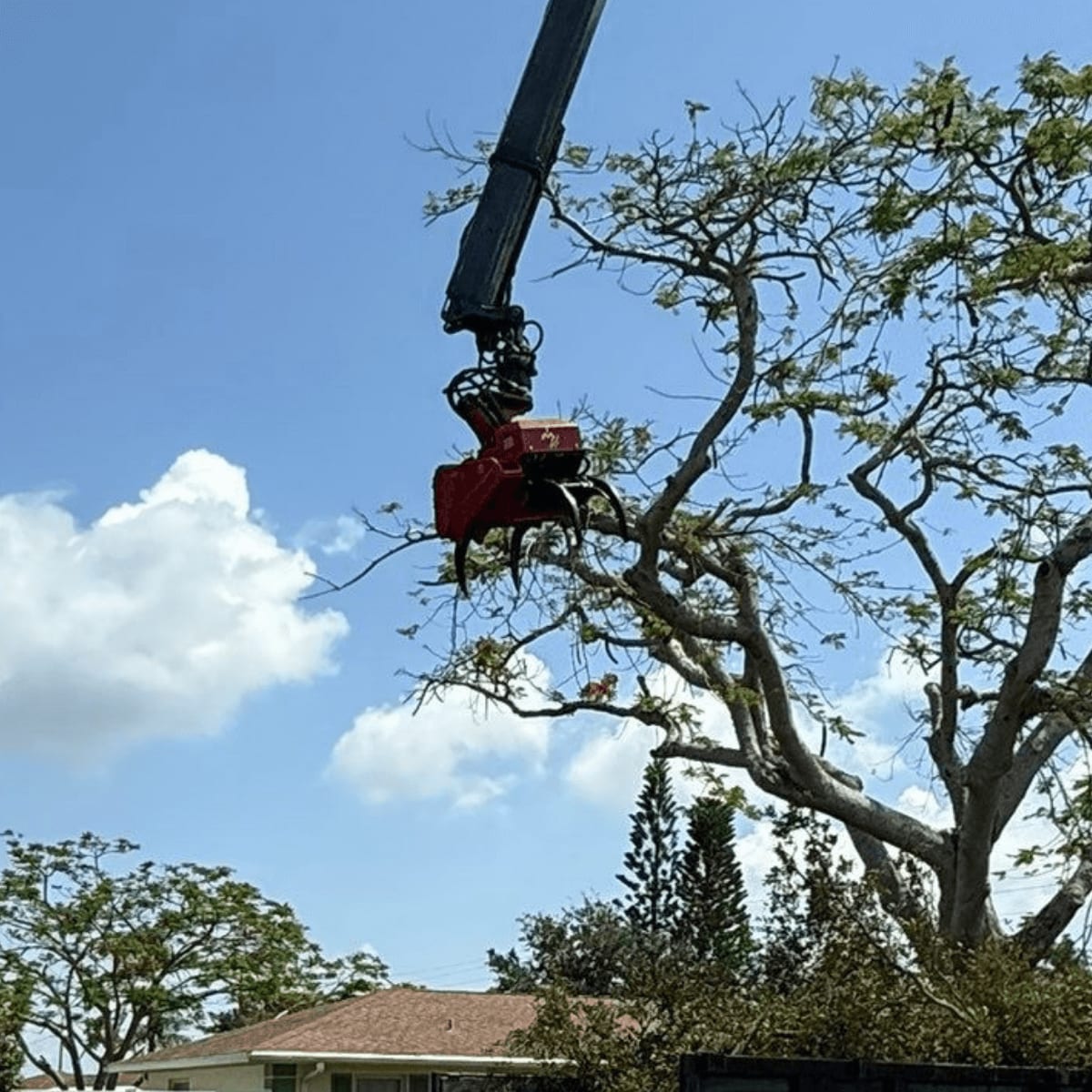
Once the assessment and permitting are complete, our expert team implements the best course of action. For removals, My Florida Tree Guys, Venice, utilizes state-of-the-art, remote-controlled knuckle-boom cranes with grapple saws. This advanced equipment allows for precise, efficient, and significantly safer removal of hazardous or hard-to-reach trees. It minimizes worker risk, reduces cleanup time, and dramatically lessens the chance of turf or property damage compared to traditional methods.
- Precision tree removal using remote-controlled grapple saws and cranes.
- Strategic pruning and cabling for remediation of less severe structural issues.
- Minimizing impact on the surrounding landscape and structures.
- Safe handling of even the largest and most hazardous trees.
Post-Service Cleanup and Follow-Up
Our commitment to professionalism doesn’t end with the tree work. We ensure a thorough cleanup of your property, leaving it tidier than we found it. All debris is removed, and the site is left safe and clean. We can also discuss stump grinding services to completely eliminate any remnants of the removed tree.
- Complete removal of all tree debris, branches, and wood.
- Raking and blowing to ensure a clean work area.
- Optional stump grinding to remove the tree’s base below ground level.
- Follow-up to ensure your complete satisfaction.
Frequently Asked Questions
How often should I have my trees inspected for safety?
It’s wise to have your trees inspected by a Professional arborist every 1-3 years, or immediately after any major storm, or if you notice any of the five signs of structural weakness.
Can I remove a dangerous tree myself in Venice, FL?
While Florida law allows the removal of documented dangerous trees without a permit on residential property, professional removal is strongly recommended. Tree work is highly dangerous, and improper removal can cause severe injury or property damage.
What if my HOA has different rules than the City of Venice?
Always check with your Homeowner Association (HOA) first. Even if the city doesn’t require a permit for a dangerous tree, HOAs often have their own architectural review processes and may require replacement trees.
What is “included bark” and why is it a problem?
Included bark occurs when two branches grow too close, trapping bark between them. This prevents proper wood formation, creating a very weak union prone to splitting, especially in high winds.
Do hurricanes make trees in Venice more prone to being unsafe?
Yes, hurricanes significantly stress trees, often causing invisible internal damage to roots and branches. This damage can lead to structural failure months or even years later, making post-storm inspections crucial.
What’s the benefit of using crane-assisted removal?
Crane-assisted removal, like that offered by My Florida Tree Guys, Venice, enhances safety, efficiency, and precision. It minimizes risk to workers, reduces cleanup time, and prevents damage to your landscape and property.
How quickly can My Florida Tree Guys respond to an emergency tree situation?
My Florida Tree Guys, Venice, offers emergency tree services and aims to respond as quickly as possible, typically within 24-48 hours, to address immediate hazards and secure your property.
What are “Florida Friendly™ trees”?
Florida Friendly™ trees are species native or adapted to Florida’s climate, requiring minimal irrigation, fertilizer, and pesticides. The City of Venice’s regulations often give special consideration to these trees.
Take the Next Step Toward a Safer Property
Don’t let a potentially unsafe tree jeopardize your property or loved ones. Recognizing the five critical signs of structural weakness is the first step toward a safer environment. With Venice’s unique climate and regulations, expert assessment and intervention are not just recommended, they’re essential. For professional, safe, and efficient tree care services, including hazardous tree removal and comprehensive assessments, Contact Us at My Florida Tree Guys, Venice. Protect your investment and ensure peace of mind.