05/07/2026
Key Takeaways:
- Horizontal Cracks are Critical: These usually indicate the wood fibers have snapped under tension and signal an imminent fall.
- Vertical Splits Vary: While often caused by “frost cracks” or lightning, they can lead to long-term decay if not managed.
- Tension vs. Compression: Understanding how force affects wood can help you predict which way a failing tree will fall.
- Arborist Documentation: Use professional assessments to qualify for permit-free removal under Florida Statute 163.045.
- Immediate Action: Any crack that goes entirely through the trunk or shows “oozing” slime is an emergency.
When it comes to the health of your trees, visible signs of damage such as cracks and splits can be concerning. While trees are incredibly resilient, they are not invincible. Horizontal cracks and vertical splits are two common types of damage that can occur in a tree, but they differ significantly in their causes, severity, and implications. Understanding these differences is crucial to maintaining the health of your tree and ensuring the safety of your property. So, which one is more likely to mean your tree is failing?
In this guide, we’ll explore the causes and implications of horizontal cracks and vertical splits, compare the two in terms of risk, and offer advice on what to do if you spot either one on your tree. We’ll also highlight how professionals like My Florida Tree Guys can help assess the health of your trees.
What Are Horizontal Cracks and Vertical Splits?
Horizontal Cracks
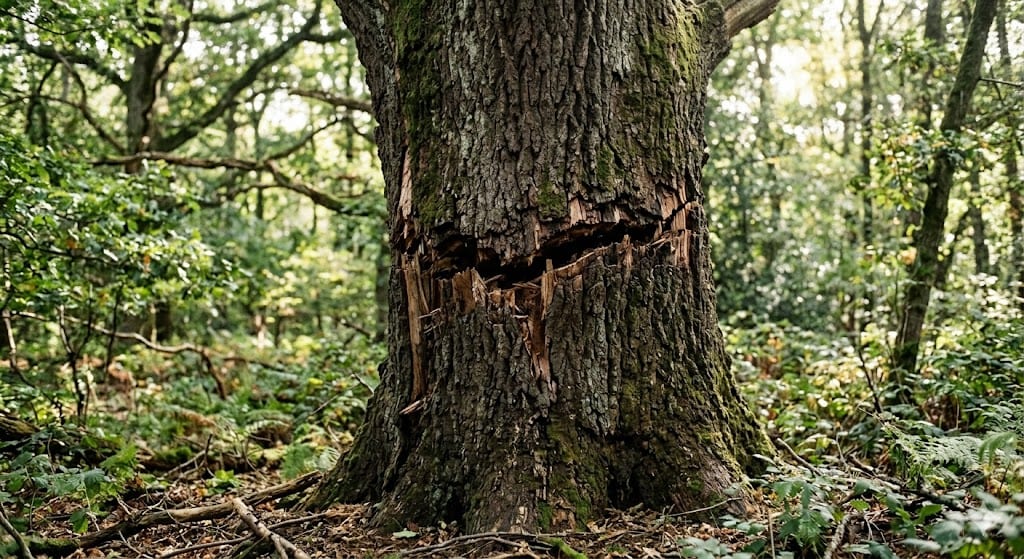
Horizontal cracks are cracks that appear across the trunk of the tree, running parallel to the ground. These cracks typically occur due to external factors such as mechanical damage, rapid tree growth, environmental stress, or temperature fluctuations. Horizontal cracks can often be seen after a storm or a physical impact to the tree, such as a branch hitting the trunk or animals attempting to climb it.
While horizontal cracks are concerning, they often affect the outer bark and don’t always go deep into the tree’s core. These cracks may not be as dangerous as other types of damage, but they can still lead to further issues like bark separation or increased vulnerability to pests if left unchecked.
Vertical Splits
Vertical splits, on the other hand, are cracks that run up and down the tree trunk. These are often much more serious than horizontal cracks, as they usually indicate internal stress or weakness. Vertical splits can happen due to rapid tree growth, freeze-thaw cycles, decay, or wind damage. This type of damage often suggests that the tree is under significant pressure internally, and if not addressed, it can weaken the tree’s overall structure.
Vertical splits are typically deeper and can penetrate the tree’s heartwood, the innermost part of the tree that provides the main support. A tree with a vertical split could be at risk of structural failure, especially if the split compromises its integrity. Vertical splits can also serve as entry points for pathogens and fungi, which could further destabilize the tree and lead to rot.
Which One Means Your Tree Is Failing?
Vertical splits are more likely to indicate that your tree is failing or is in danger of failing. Here’s why:
Internal Damage and Structural Integrity
Vertical splits often result from internal stress or decay that has weakened the core structure of the tree. If the tree’s trunk has a deep vertical split, it’s a sign that the tree may no longer be able to stand up to storms, high winds, or other environmental factors. This type of damage often leads to structural instability and increases the likelihood of the tree failing in the future. If you have a vertical split on your tree, it’s important to act quickly to assess the damage before it progresses.
Pathogen Exposure and Decay
The deep penetration of vertical splits exposes the tree’s internal tissues to harmful pathogens and fungi. These pathogens can cause decay in the heartwood, which weakens the tree further and accelerates the decline of the tree’s health. Over time, this type of damage can turn your tree into a hazard, making it more prone to falling over or breaking under stress.
Increased Risk of Failure
A tree with a vertical split is at higher risk of breaking, especially in areas with high winds, heavy rainfall, or storms. The structural weakness caused by the split can cause the tree to lean or even topple completely. This is especially dangerous if the tree is located near structures, roads, or high-traffic areas.
Warning Signs of Internal Stress
If you notice that your tree has a vertical split, it’s important to check for other signs of internal stress, such as bark discoloration, fungal growth, or pools of sap. These could be indications that the tree’s heartwood is decaying, further compromising its stability. Vertical splits can also occur if the tree has been growing too quickly and cannot support its own weight.
Horizontal Cracks: Less Immediate Risk but Still Concerning
While horizontal cracks may not indicate immediate failure, they are still a cause for concern. Horizontal cracks typically result from external factors such as mechanical damage, trauma, or rapid growth. These cracks are usually more superficial, affecting the outer bark rather than the tree’s core.
However, there are cases where horizontal cracks can worsen over time. For example:
- Expansion of the Crack: If the crack continues to expand, it may eventually reach the tree’s core, leading to internal damage and possible rot. Over time, the crack could widen, making the tree more unstable.
- Increased Exposure to Pests: Horizontal cracks can create gaps in the bark, which can expose the tree to insects and diseases. Pests can enter through these cracks, which can lead to the spread of fungal infections or wood rot, causing long-term damage.
- Stress from Growth: In young trees that are still growing rapidly, horizontal cracks may result from the tree’s internal tissues trying to stretch and expand. While these cracks may heal on their own, they can also become a source of weakness if the tree’s growth isn’t controlled.
What Should You Do if You Notice Cracks or Splits?
Whether it’s a horizontal crack or a vertical split, it’s important to take immediate action when you notice damage to your tree. Here are a few steps you can take:
1. Contact a Certified Arborist
An experienced arborist will assess the damage and determine whether the tree is at risk of failure. They will inspect the tree’s internal health and provide a treatment plan, which may include pruning, cabling, or tree removal if necessary.
2. Regular Monitoring
In some cases, cracks may not be as serious as they first appear. Regularly monitor the damage and look for signs that the crack is worsening. If the tree is showing signs of decay, such as fungal growth, soft spots, or bark separation, it may be time to consider removal.
3. Pruning or Cabling
If the tree is still structurally stable, your arborist may recommend pruning the affected area to prevent further damage or cabling the tree to provide additional support. This can help stabilize the tree and keep it from further damage.
4. Tree Removal
If the vertical split or horizontal crack is severe enough to compromise the tree’s structural integrity, removal may be the safest option. It’s important to act quickly, as waiting too long can result in the tree becoming a safety hazard.
My Florida Tree Guys, Venice, FL, specializes in tree care and removal services throughout Northeast Florida. Our certified arborists provide expert assessments for tree health, offering services such as tree pruning, trimming, 24/7 emergency tree services, stump grinding, and arborist consultations. We ensure safe and professional work, being fully licensed, insured, and OSHA-certified. Whether dealing with horizontal cracks, vertical splits, or other tree issues, we offer tailored solutions like cabling or removal. Contact us today at (904) 442-8212 for a free consultation and keep your trees healthy and your property safe.
Frequently Asked Questions (FAQs)
What is the difference between horizontal cracks & vertical splits?
Horizontal cracks typically result from physical trauma, rapid growth, or environmental stress. They often signify bark damage but might not always indicate imminent tree failure. Vertical splits are more serious, often caused by internal pressure, freeze-thaw cycles, or decay. These can compromise the tree’s structural integrity and may require immediate attention.
How can I tell if my tree is failing?
Look for signs such as large cracks, bark separation, excessive leaning, or a significant reduction in leaf coverage. If you notice any of these, it’s best to call a professional arborist to assess the health of the tree.
Can horizontal cracks be repaired?
Yes, in many cases, horizontal cracks can be managed through pruning, cabling, or monitoring the tree’s condition. If the crack worsens over time, further interventions like tree removal might be necessary.
Are vertical splits dangerous for my tree?
Vertical splits can be dangerous because they often indicate that the tree is under severe stress or internal decay. They can lead to further structural damage, making it crucial to consult an arborist for proper treatment or removal.
Should I remove a tree with a vertical split?
If the vertical split is deep and compromising the structural integrity of the tree, it might need to be removed. An arborist can evaluate the severity of the split and suggest the safest course of action.
What should I do if I notice cracks or splits in my tree?
Immediately contact a certified arborist to assess the tree. Depending on the damage, they may recommend pruning, cabling, or even removal if the tree poses a risk to your property.
How do I know if my tree is worth saving or should be removed?
An arborist will assess the size, location, and severity of the cracks or splits, as well as the overall health of the tree. Based on this, they will recommend whether saving the tree is feasible or if removal is necessary.
Can storms cause cracks or splits in trees?
Yes, storms can exacerbate existing weaknesses in trees or cause new damage through high winds or heavy rainfall. It’s essential to inspect your trees after any significant weather event to prevent further damage.
What other signs should I look for in a failing tree?
In addition to cracks and splits, watch for drooping branches, unusual leaning, fungus growth, and dying leaves. These are all signs that the tree may be in distress and require professional care.
Summary Checklist: Horizontal Cracks vs. Vertical Splits
| Category | Issue / Cause | Risk Level | Action Required |
|---|---|---|---|
| Horizontal cracks | Mechanical damage, impact trauma, or severe structural tension | Critical | Immediate danger. Contact an arborist at once, as horizontal cracks often indicate structural failure and imminent collapse risk |
| Vertical splits | Internal pressure, freeze-thaw stress, decay, or rapid trunk expansion | High | Arrange urgent evaluation, as deep splits can expose the tree core to decay and structural weakening |
| Tree health monitoring | Routine inspection for cracks, storm damage, fungal growth, and structural decline | Preventative | Inspect trees regularly, especially after strong winds or severe weather events |
| Decay and rot | Fungal infection, pathogens, or prolonged internal structural deterioration | High | Address immediately with a professional assessment to determine internal stability and treatment options |
| Bark separation | Storm trauma, pest activity, environmental stress, or natural aging | Moderate | Have an arborist inspect for hidden pest infestations, disease, or structural concerns beneath the bark |
| Wind stress | High winds, tropical storms, hurricanes, or repeated weather exposure | Variable | Monitor closely, as strong winds can rapidly worsen existing cracks, lean, or structural instability |
| Professional assessment | Ongoing care and structural evaluation by a certified arborist | Essential | Schedule a professional tree inspection for structural support, pruning recommendations, or safe removal planning |
Final Advice
When assessing cracks or splits in your tree, always be more concerned about vertical splits than horizontal cracks. Vertical splits can indicate serious internal damage and structural weakness, which can lead to tree failure. Horizontal cracks, while still concerning, are often caused by external trauma and may not immediately threaten the tree’s core integrity. However, both should be evaluated by a professional arborist to determine the best course of action. If you spot any cracks or splits in your tree, don’t hesitate to call a certified arborist to ensure the safety of your tree and property.