04/10/2026
Dealing with a fallen tree is stressful enough, but then you face the question: Will insurance cover it? For homeowners in St. Charles County, Missouri, understanding your policy’s nuances and local regulations is key to minimizing out-of-pocket costs. We’ll break down exactly what your homeowners’ insurance typically covers for tree removal, specific to our local area.
Key Takeaways
- Homeowners’ insurance usually covers tree removal if it damages a covered structure due to a sudden, accidental peril like a storm.
- Payouts for debris-only removal (no structure damage) are often capped at $500-$1,000 per storm in Missouri.
- The St. Charles City ’50/50′ program can cover 50% of costs for dangerous trees in the city’s right-of-way.
- Local permits are required for street trees or large-scale removals in St. Charles City and the unincorporated county.
- For your neighbor’s trees, your insurance typically pays unless you can prove their negligence.
- Choosing an ISA-certified, insured, and local tree service is crucial for proper claim handling and expert removal.
What is Tree Removal Insurance Coverage?
Tree removal insurance coverage refers to the portion of your homeowners’ insurance policy that helps pay for the costs associated with removing a tree that has fallen on your property. This coverage isn’t automatic for all tree-related issues; it specifically addresses damage or obstruction caused by a tree due to a ‘covered peril’ within your policy. According to the Missouri Department of Commerce and Insurance (DCI), coverage typically applies if the tree damages your home or other insured property, regardless of who owns the tree.
When Does Homeowners Insurance Cover Tree Removal in St. Charles County?
Your homeowners’ insurance policy in St. Charles County typically covers tree removal under specific circumstances, mainly when a tree falls due to a sudden, accidental event that your policy covers. These events, known as perils, include common occurrences in our region like severe storms and wind damage. However, the extent of coverage varies significantly based on what the tree impacts.
Tree Falls on a Covered Structure
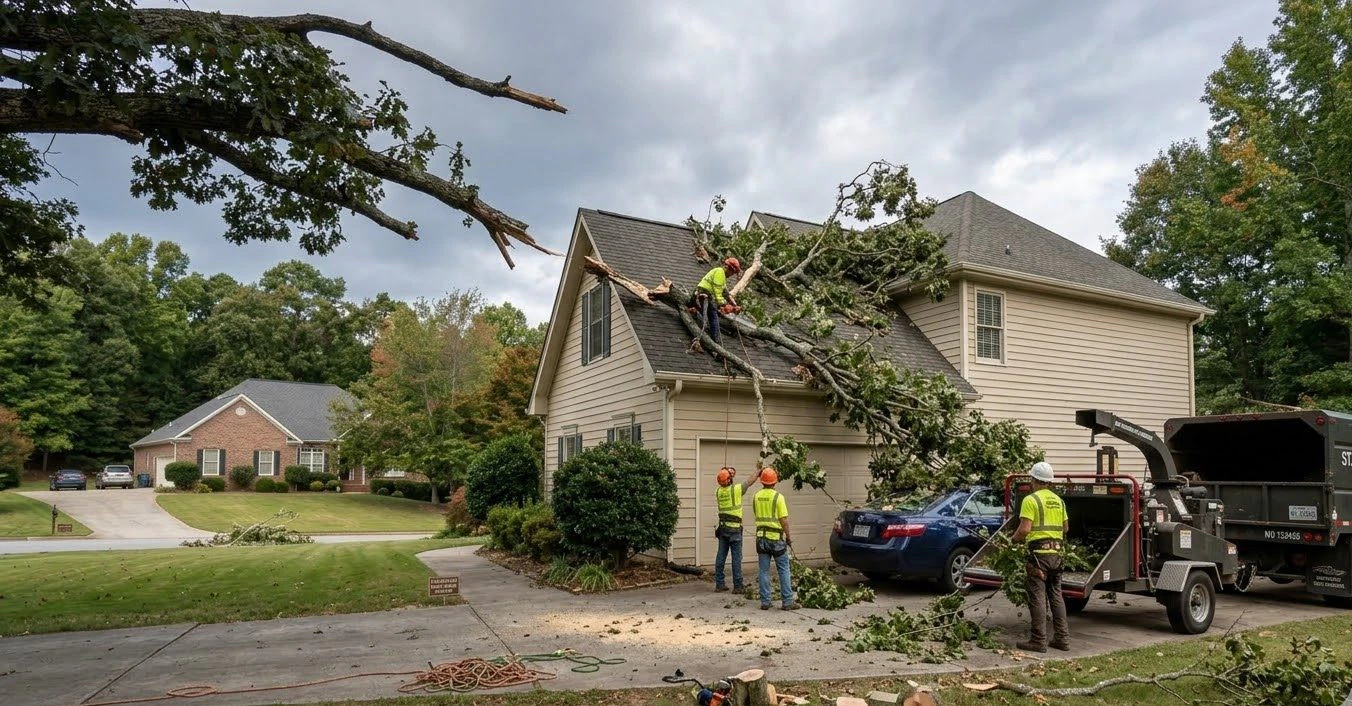
If a tree falls on your home, garage, shed, or fence, your insurance policy is likely to cover the costs. This is considered damage to a ‘covered structure.’ Your policy will typically pay for the entire cost of removing the tree from the structure, as well as the repairs to the damaged property itself. This coverage often falls under Coverage A (Dwelling) and is a primary reason homeowners carry insurance.
Tree Blocking Driveway or Essential Access
Should a tree fall and block your driveway, a ramp for the disabled, or another essential access point, your policy might offer limited coverage for its removal. This ensures you can access your property or that emergency services can reach your home. The coverage here is generally for the removal itself, not for any underlying property damage, and might have a lower cap than structure damage.
Tree Removal for Preventative Reasons (Limited Coverage)
Insurance rarely covers the removal of a dead or diseased tree before it falls, viewing it as a maintenance issue. However, there are limited exceptions. If a certified arborist has officially declared a tree an imminent hazard and you have documented this, some policies might offer minimal coverage, especially if the tree is threatening a covered structure. In St. Charles County, this is particularly relevant due to prevalent biological threats like the Emerald Ash Borer (EAB), Oak Wilt, and Dutch Elm Disease. These infestations often necessitate preventative removal to protect property and prevent spread. Always check your specific policy and keep detailed records of any arborist assessments.
Understanding Insurance Payout Limits and Deductibles
Understanding the payout limits and deductibles of your homeowners insurance is crucial for managing unexpected tree removal expenses in St. Charles County. Not all tree removal scenarios receive the same level of financial support from your insurer. It’s essential to differentiate between a tree that causes structural damage and one that merely creates yard debris.
Debris-Only vs. Structure Damage
The most significant difference in coverage lies in whether the tree caused direct damage to a covered structure. If a tree falls on your house, garage, or fence, your insurance typically covers the entire cost of removing the tree from that structure to allow for repairs. This falls under your dwelling coverage (Coverage A). However, if a tree falls in your yard and causes no structural damage, most standard homeowners’ policies in Missouri cap the payout for removing this debris at $500 to $1,000 per storm. This cap applies even if multiple trees fall or the debris is extensive. It’s a common point of confusion for homeowners.
Deductibles and Claim Severity
Your deductible applies to most insurance claims, including tree removal. This is the amount you pay out-of-pocket before your insurance coverage kicks in. For example, if your deductible is $1,000 and the covered tree removal costs $2,000, you’ll pay the first $1,000, and your insurer will cover the remaining $1,000. Statistics for Missouri indicate an average ‘Wind and Hail’ claim settlement ranging from $11,695 to $14,747, which often includes both tree removal from the structure and associated structural repairs. Always factor in your deductible when assessing potential out-of-pocket costs.
Navigating Local Regulations for Tree Removal in St. Charles County
Navigating local regulations for tree removal in St. Charles County, MO, is as important as understanding your insurance policy. Depending on your specific location within the county and the nature of the tree, you might need permits or qualify for cost-sharing programs. Ignoring these rules can lead to fines or delays.
The St. Charles City “50/50” Program
For residents within the City of St. Charles, the Residential 50/50 Cost-Sharing Tree Removal Program allows the city to pay 50% of the cost to remove dead or dangerous trees located within the city’s right-of-way. The Director of Public Works acts as the final judge on eligibility, and trees are handled on a first-come, first-served basis.
Permit Requirements You Need to Know
Permit requirements vary between St. Charles City and unincorporated St. Charles County. Here’s what you need to know:
- Street Trees (City of St. Charles): A permit is required from the Director of Public Works to remove or perform any significant work on a ‘street tree,’ even if it’s on private property but borders the road.
- Large-Scale Removal (City of St. Charles): For parcels over one acre, a permit is necessary if you plan to remove 50% or more of live trees with a diameter of 10 inches or greater.
- Land Disturbance (Unincorporated St. Charles County): If you’re clearing more than 5,000 square feet of vegetation, a Land Disturbance Permit is required. This often applies to larger property development or significant land clearing projects.
- Always check with your local municipal office or the St. Charles County Planning and Zoning Department before beginning any major tree removal project.
Choosing the Right Tree Service in St. Charles County
When dealing with fallen trees or planning a removal, selecting the right tree service in St. Charles County is paramount. The quality of service directly impacts safety, property protection, and your overall experience, especially when navigating insurance claims. You need a partner who understands both arboriculture and the local landscape.
What to Look For in a Tree Removal Company
A top-tier tree removal company offers more than just cutting down trees. They provide expertise, safety, and reliability. When you’re searching for a provider, especially after storm damage or for complex removals, consider these factors:
- ISA Certified Arborists: Ensures the crew understands tree biology, proper removal techniques, and safety standards.
- Fully Insured: Protects you from liability if workers are injured or property is damaged during the removal.
- Local Presence and Reputation: Established companies with deep roots in St. Charles County understand local tree species, climate challenges, and regulations. Check reviews for consistency and reliability.
- Specialized Equipment: For large or complex removals, look for companies with crane-assisted capabilities, which enhance safety and efficiency.
- Transparent Pricing & Contracts: Avoid companies with non-refundable deposits that are restrictive or those that provide vague estimates. Ensure the contract clearly outlines all services, including stump grinding, to prevent ‘billing surprises’ or delays.
- Emergency Services: For storm-related incidents, 24/7 emergency response is a significant advantage.
Why Local Expertise Matters
Local expertise cannot be overstated. A company familiar with St. Charles County’s climate factors – like frequent Tornadoes and Straight-line Winds – understands the urgency and specific challenges of emergency tree removal from structures. They are also knowledgeable about local biological threats such as the Emerald Ash Borer and Oak Wilt, which often necessitate specialized removal or treatment. A local provider is integrated into the community, offers faster response times, and has a vested interest in maintaining a strong local reputation. They can also guide you through the specific permit requirements of St. Charles City or unincorporated St. Charles County.
The Tree Removal Process: From Emergency to Claim
The tree removal process, particularly when an insurance claim is involved, requires careful steps. From the initial incident to the final clearing, knowing what to do and when can streamline the entire experience. Whether it’s an immediate hazard or a planned removal, a structured approach is best.
Emergency vs. Non-Emergency Removal
Emergency tree removal is needed when a tree poses an immediate threat to life, property, or essential access. This often follows severe weather events common in St. Charles County. Non-emergency removal, on the other hand, is for planned projects like removing a dead tree before it falls, land clearing, or aesthetic reasons. For emergencies, prioritize safety first. For non-emergencies, you’ll have more time to gather quotes and plan. Professional tree removal services offer both emergency and scheduled options, ensuring you have expert help when you need it most.
Steps to Filing an Insurance Claim
Filing an insurance claim for tree removal involves several critical steps to ensure a smooth process and maximum coverage:
- Ensure Safety First: If a tree has fallen, secure the area. Do not attempt to remove it yourself, especially if it’s on power lines or a structure.
- Document the Damage: Take clear photos and videos of the tree, the damaged property, and the surrounding area from multiple angles. This is crucial evidence for your claim.
- Contact Your Insurance Provider: Report the incident as soon as safely possible. They’ll guide you through their specific claims process.
- Get Professional Estimates: Obtain detailed, written estimates from reputable, insured tree removal companies. Professional quotes should be clear and comprehensive for insurance submission.
- Understand Your Policy: Review your policy to understand your deductible and coverage limits for tree removal and property damage.
- Coordinate with Your Insurer: Your insurance adjuster will assess the damage. Provide them with all documentation and estimates. They may recommend preferred vendors, but you often have the right to choose your own.
- Schedule Removal and Repairs: Once approved, proceed with the tree removal and any necessary property repairs.
Average Tree Removal Costs in St. Charles County
Understanding the average costs for tree removal in St. Charles County helps you budget and assess quotes. These costs vary significantly based on tree size, location, complexity, and whether specialized equipment like cranes are needed. These figures represent typical ranges for professional services, excluding any potential insurance coverage.
| Tree Size Category | Typical Height Range | Average Cost in St. Charles County |
| Small Tree Removal | Under 30 feet | $392 – $600 |
| Medium Tree Removal | 30 – 60 feet | $604 – $818 |
| Large Tree Removal | Over 60 feet | $1,634 – $2,500+ |
| Stump Grinding (Add-on) | Varies by diameter | $150 – $400 (typical) |
| Emergency Removal (Add-on) | Any size, urgent response | 25% – 50% higher than standard removal |
Neighbor’s Tree Falls on Your Property: Who Pays?
It’s a common scenario and a frequent source of homeowner disputes: a neighbor’s tree falls onto your property. The question of who is financially responsible for the removal and any resulting damage is often misunderstood. In St. Charles County, as in most of Missouri, the rule of thumb is clear: your insurance pays.
- Your Homeowners Insurance: If a tree from your neighbor’s yard falls onto your house, fence, or other insured property, your homeowners insurance policy is typically responsible for covering the removal costs and any damage repairs.
- Proving Negligence: The only exception to this rule is if you can prove your neighbor was negligent. Negligence means they knew the tree was dead, diseased, or otherwise hazardous and failed to take reasonable steps to address it. For example, if a certified arborist documented the tree as a danger, and your neighbor ignored repeated warnings, you might be able to recover costs from their insurance. This requires clear documentation and is often challenging to prove.
- Communication is Key: Even if your insurance pays, it’s always best to communicate openly with your neighbor. They might be willing to help with the deductible or contribute to costs, especially if they are aware of the tree’s condition. However, legally, your insurance is usually the primary payer.
Frequently Asked Questions
Does homeowners’ insurance cover tree removal in St. Charles County, MO?
Most standard homeowners’ policies in Missouri cover tree removal if the tree falls due to a covered peril (like wind, lightning, or hail) and damages a covered structure, blocks access, or falls on a neighbor’s insured property. Coverage for debris-only removal is often capped.
What if a tree falls on my house or fence?
If a tree falls on your house, your insurance typically covers the entire cost of removing the tree from the structure to facilitate repairs. This falls under your dwelling coverage and is not usually subject to the lower debris removal caps.
Will insurance pay to remove a dead tree before it falls?
Coverage for removing dead or diseased trees before they fall is rare. Some policies might offer limited coverage if an arborist has officially declared the tree a hazard and you’ve taken steps to mitigate it, but it’s not standard. Check your specific policy.
What are the typical insurance payout limits for tree removal?
For debris removal that doesn’t hit a structure, most Missouri policies cap payouts at $500 to $1,000 per storm. For structural damage, the cost to remove the structure is typically fully covered under your dwelling coverage, minus your deductible.
Is there a city program to help with costs in St. Charles City?
Yes, the Residential 50/50 Program helps with dangerous trees in the right-of-way.
Whose insurance pays if my neighbor’s tree falls on my property?
If your neighbor’s tree falls on your property, your insurance usually pays. You can only seek reimbursement from your neighbor’s insurance if you can prove their negligence, such as ignoring a certified arborist’s warning about a hazardous tree.
Do I need a permit for tree removal?
Yes, in St. Charles City for street trees or large-scale clearing, and in the County for land disturbance over 5,000 sq. ft. Reference the SCCMO Permit Guide for more details.
Final Thoughts on Insurance and Tree Removal in St. Charles County
Understanding your insurance coverage for tree removal in St. Charles County can save you significant stress and expense. By knowing when your policy applies, navigating local regulations, and choosing a reputable, local expert like Mathias Precision Tree Service, you’ll ensure a smooth and efficient process. Don’t wait for a crisis; prepare now and know your options. For any tree removal needs, especially those involving insurance claims, contact us today.