02/28/2026
A tree falling on a power line is not just a nuisance; it’s a dangerous emergency. For homeowners in Venice, FL, where severe weather can strike quickly, knowing the correct steps to take can mean the difference between safety and severe risk. This guide provides clear, actionable advice to help you navigate this critical situation safely and effectively.
Key Takeaways
- Prioritize safety above all else: stay at least 30-35 feet away from fallen trees and lines.
- Immediately call 911 for emergencies (fire, injury) and your electric utility company to report the downed lines.
- Understand the distinct responsibilities: utilities handle main power lines; homeowners often manage service lines and debris.
- Be aware of Venice, FL’s specific tree regulations and how Florida HB 1159 impacts emergency tree removal.
- Engage a licensed, insured, and locally experienced tree service like My Florida Tree Guys, Venice, only after the utility company has cleared the area as safe.
- Document the damage safely for potential insurance claims, and prepare for possible tree removal costs.
What Is a Tree Falling on a Power Line Emergency?
A tree falling on a power line creates an immediate, severe hazard due to the risk of electrocution, fire, and widespread power outages. This situation demands a precise, safety-first response from everyone involved.
The Hidden Dangers of Downed Power Lines
When a tree comes into contact with live electrical wires, it can energize the tree itself, the ground around it, and anything else touching it. This makes the entire area extremely dangerous. Even if the power appears out, the lines could still be live or re-energized without warning.
Immediate Safety Steps: Your First Priority
Your first and most critical response to a tree falling on a power line must always be focused on safety. Do not approach the scene, and ensure others maintain a safe distance.
Stay Far Away: The Danger Zone
The danger zone extends far beyond the visible point of contact. Electricity can travel through the ground, water, fences, and even surrounding vegetation. A minimum distance of 30 to 35 feet (about the length of a school bus) is essential.
- Maintain Distance: Keep at least 30-35 feet away from the fallen tree, power lines, and anything in contact with them.
- Warn Others: Alert family members, neighbors, and keep pets indoors.
- Assume Lines Are Live: Never assume a downed line is de-energized, even if sparks are absent or power is out.
- Avoid Contact: Do not touch the tree, wires, or anything near them with any object.
Call for Help: 911 and Your Utility Company
Once you’ve secured the immediate area, contacting the proper authorities is the next vital step. Quick communication ensures professionals can respond and manage the hazard.
- Call 911 immediately: If you see sparks, smoke, fire, or if anyone is injured, call 911 without delay.
- Contact Your Electric Utility: Report the downed lines to your utility company’s emergency number. They need to de-energize the lines to make the area safe for any subsequent work.
- Provide Clear Information: Give precise location details, describe the situation, and mention any visible damage.
Document Safely for Insurance
While your safety is paramount, documenting the incident can be crucial for insurance claims later. Do this only if it’s safe and from a significant distance.
- Take Photos/Videos: From a safe distance, capture images or video of the fallen tree, the power lines, and any damage to your property.
- Note Time and Date: Record when the incident occurred and when you contacted emergency services and the utility company.
- Collect Contact Information: If there are witnesses or utility/emergency personnel on site, note their contact details if appropriate.
Understanding Who Is Responsible: Utility vs. Homeowner
One of the most common points of confusion after a tree falls on a power line involves who is responsible for what. Understanding these roles can prevent delays and unnecessary risks.
| Scenario | Utility Company Responsibility | Homeowner Responsibility |
|---|---|---|
| Tree on Main Power Line (Street) | De-energize, clear the tree from the lines, and repair the infrastructure. | None. After the utility clears lines, debris on private property becomes the homeowner responsibility. |
| Tree on Service Line (Pole to House) | De-energize lines. | Tree removal from the service line and debris cleanup. |
| Tree on House / Property (After hitting lines) | De-energize lines. | Tree removal from home or property and debris removal. |
| Tree on Neighbor Property Affecting Your Lines | De-energize lines. | Coordinate with the neighbor. Cost may be shared depending on the situation. |
Utility Company’s Role
Utility companies, like Florida Power & Light (FPL) in many parts of Florida, are primarily responsible for the main power lines that run along streets and connect to individual properties.
- De-energizing Lines: Their crews must respond to de-energize and secure any downed primary power lines.
- Clearing Main Lines: They are responsible for removing tree sections that directly interfere with or are tangled in their main power infrastructure.
- Repairing Infrastructure: They repair damaged poles, transformers, and main power lines.
Homeowner’s Responsibility
Homeowners typically bear responsibility for trees located on their private property, even if they affect power lines, especially the service lines leading to their home.
- Trees on Private Property: Generally, if the tree originated on your property, you are responsible for its removal once the utility company has made the area safe.
- Service Lines: You are often responsible for trees affecting the service line that runs from the utility pole to your house.
- Debris Removal: After the utility company clears their lines, homeowners are usually responsible for the cleanup and disposal of the remaining tree debris from their property.
Navigating Local Regulations in Venice, FL
Venice, Florida, has specific regulations regarding tree care and removal that homeowners need to be aware of, even in emergencies. Navigating these rules correctly can save you time and avoid potential fines.
Venice’s Tree Protection Ordinances
The City of Venice has detailed ordinances designed to protect significant trees. These rules dictate when and how trees can be removed or pruned.
- Protected Trees: Categories like ‘Heritage Trees,’ ‘Venetian Trees,’ and ‘Canopy Road Trees’ require specific permits for removal.
- Pruning Restrictions: Significant pruning (branches 10 inches or larger on protected trees, or 2 inches or larger in a Canopy Road Protection Zone) also needs a permit and Professional Arborist supervision.
- Exemptions: Single-family lots of 1/2 acre or less are often exempt from most tree code requirements, except for the protected tree categories.
The Climate Factor: Why Venice, FL, Faces Unique Risks
Venice, FL’s subtropical climate and lush vegetation contribute significantly to the risk of trees falling on power lines. Understanding these factors helps prepare for and respond to emergencies.
Hurricane and Tropical Storm Impacts
Hurricane season is a major concern for Florida. The sheer force of these storms can easily uproot trees and snap branches, sending them crashing into power lines.
- High Wind Speeds: Events like Hurricane Milton in October 2024 brought sustained winds of 92 mph and gusts up to 107 mph to Venice, causing extensive tree damage.
- Widespread Outages: These storms frequently lead to widespread power disruptions as vegetation interacts with electrical infrastructure.
- Saturated Soil: Heavy rains during storms can saturate the soil, making trees more susceptible to uprooting even in moderate winds.
Lightning Season and Vegetation Growth
Beyond hurricanes, Florida’s climate presents other challenges, including frequent lightning and rapid vegetation growth.
- Lightning Strikes: Florida is the lightning capital of the U.S. Direct strikes can splinter trees, sending debris onto power lines.
- Rapid Growth: The warm, humid climate promotes fast tree growth, leading to more vegetation near power lines if not properly maintained. Trees and plants were responsible for 22% of 150,000 power outages reported by Florida’s investor-owned power companies in 2020.
- FPL Statistics: Between 2007 and 2020, FPL reported 118 deaths from people interacting with power lines or equipment, with over half occurring around homes when individuals touched tree limbs or cleared vegetation.
Hiring a Professional Tree Service: What to Look For
Once the utility company confirms the area is safe, your next step is to contact a professional tree service. Choosing the right company, especially in an emergency, is crucial for efficient and safe removal.
Why Professional Expertise Matters
Emergency tree removal, especially involving power lines, is not a DIY job. It requires specialized equipment, training, and an understanding of safety protocols.
- Safety First: Professionals have the training and gear to work safely around damaged trees and potential hazards.
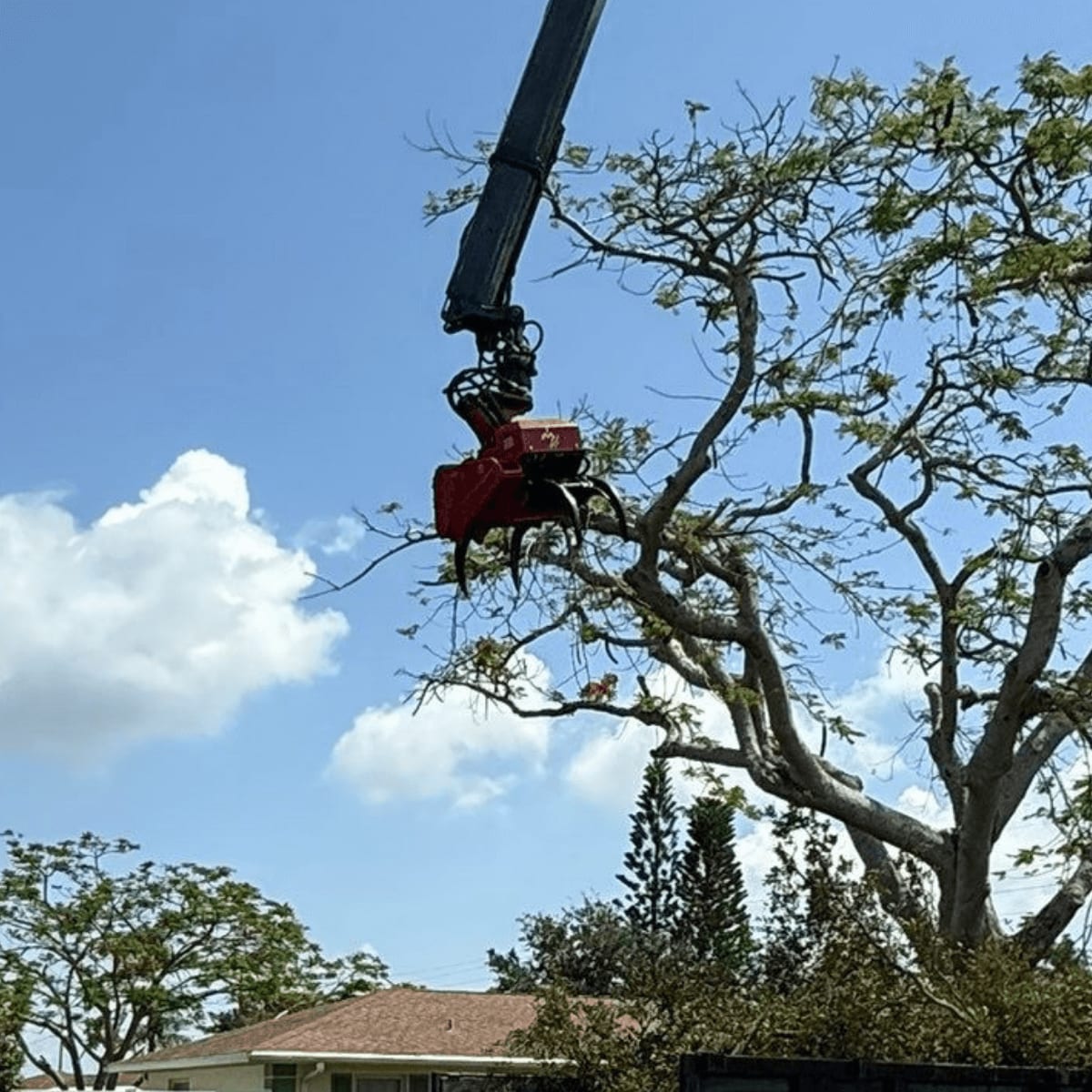
- Specialized Equipment: They use cranes, lifts, and rigging techniques to remove large, unstable tree sections without further damage.
- Insurance & Licensing: A reputable company carries liability insurance and workers’ compensation, protecting you from financial responsibility if an accident occurs.
- Local Knowledge: A local expert like My Florida Tree Guys, Venice, understands specific tree species, local regulations, and common storm damage patterns in the area.
Cost and Insurance Coverage for Tree Removal
Understanding the potential costs and how insurance might factor in can help alleviate some stress during an emergency. Emergency tree removal often comes with a higher price tag due to the urgency and inherent risks.
Average Costs for Emergency Tree Removal
The average cost for tree removal can vary widely based on tree size, location, and the complexity of the job, especially in emergency situations.
- Average Cost: The typical cost for tree removal is around $750 per tree.
- Emergency Surcharge: Expect emergency services to be more expensive, potentially ranging from $1,000 to $5,000 or more for large, complex removals near structures or power lines.
- Factors Influencing Cost: Tree size, species, location (e.g., proximity to structures, power lines), accessibility, and the extent of damage all play a role.
- Debris Removal: Confirm if the quoted price includes hauling away all debris.
Homeowner’s Insurance: What’s Covered?
Your homeowner’s insurance policy might provide coverage for tree removal and associated damages, but it depends on the circumstances.
- Covered Perils: Most policies cover tree removal if the tree falls due to a covered peril (like wind, lightning, or hail) and damages your insured property (house, fence, shed).
- No Damage, No Coverage: If a tree falls but causes no damage to insured property, removal costs are typically not covered.
- Neighbor’s Tree: If your neighbor’s tree falls and damages your property, your policy usually covers the damage, and your insurer may then seek reimbursement from your neighbor’s policy.
- Deductibles: Remember, your deductible will apply. It’s wise to contact your insurance provider as soon as safely possible after documenting the incident.
Common Mistakes to Avoid After a Tree Falls
In a stressful situation, it’s easy to make mistakes that can escalate danger or complicate the recovery process. Avoid these common pitfalls to ensure your safety and minimize further issues.
- Approaching the Scene: Never go near downed power lines or trees in contact with them. The risk of electrocution is extremely high.
- Attempting DIY Removal: Do not try to cut, move, or clear any part of the tree yourself, even if you think the power is off. Only utility crews can confirm de-energized lines.
- Ignoring Utility Company Advice: Always wait for the utility company to arrive, assess, and declare the area safe before any other work begins.
- Forgetting Documentation: Neglecting to take photos or videos from a safe distance can hinder future insurance claims.
- Hiring Uninsured Contractors: Never hire a tree service that cannot provide proof of current licensing and comprehensive insurance. You could be liable for accidents.
- Disregarding Local Regulations: Even in emergencies, understanding Venice’s specific tree ordinances and Florida HB 1159 can prevent unnecessary complications or fines.
Frequently Asked Questions
What is the absolute first thing to do if a tree falls on a power line?
If a tree falls on a power line, immediately stay at least 30-35 feet away from the tree and lines. Call 911 if there’s a fire or injury, then contact your electric utility company’s emergency line. Never attempt to touch or move the tree or wires yourself.
Who is responsible for removing a tree from a power line?
The utility company is responsible for clearing trees from the main power lines. Homeowners are typically responsible for trees on service lines connecting to their house and for debris removal from their property after the utility has secured the lines.
Does homeowner’s insurance cover tree removal from power lines?
Homeowner’s insurance may cover tree removal costs if the tree falls due to a covered peril (like a storm) and causes damage to your property or a neighbor’s. Review your policy or speak with your agent to understand your specific coverage.
Are there special permits needed for emergency tree removal in Venice, FL?
Yes, Venice, FL, has tree protection ordinances. Removing ‘Heritage Trees,’ ‘Venetian Trees,’ or ‘Canopy Road Trees’ generally requires a permit. However, Florida House Bill 1159 allows the removal of dangerous trees on residential property without a local permit, if documented by a Professional arborist.
When should I contact a tree service after a tree falls on a power line?
Only after the utility company has de-energized the lines and declared the area safe should you contact a professional, licensed, and insured tree service. Attempting to clear the tree before this is extremely dangerous due to electrocution risks.
Why are trees falling on power lines a particular concern in Venice, FL?
Florida’s subtropical climate, especially in Venice, makes it highly susceptible to hurricanes, tropical storms, and lightning. These weather events frequently cause significant tree damage and power outages, increasing the risk of trees falling on power lines.
Safety Comes First When a Tree Hits a Power Line
Dealing with a tree on a power line is a serious emergency that demands immediate, careful action. Your safety and the safety of your community always come first. By understanding the critical steps, local regulations in Venice, FL, and who to call, you can navigate this stressful situation effectively. Once the utility company declares the area safe, My Florida Tree Guys, Venice, stands ready to provide expert, efficient emergency tree removal services. Don’t hesitate to reach out for professional assistance to restore safety and order to your property. Visit our website or contact us directly to learn more about our comprehensive tree care solutions.